Vehicle GPS Tracking System: Complete Guide for Fleet Owners in India
Managing vehicles becomes increasingly difficult as a business grows. Whether you operate delivery vehicles, taxis, trucks, school vehicles or a commercial fleet, knowing where your vehicles are and how they are being used can make a major difference.
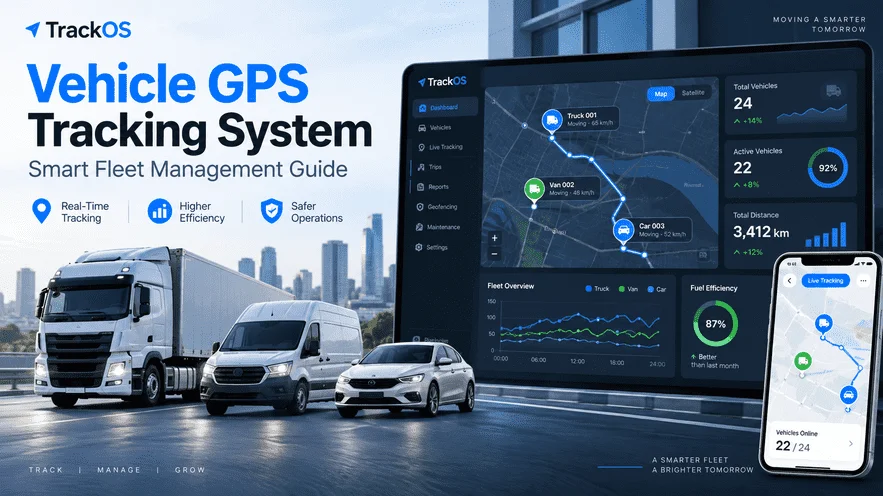
A vehicle GPS tracking system gives fleet owners better visibility over their vehicles by combining GPS location data with fleet management software.
Instead of depending only on phone calls or manual updates from drivers, businesses can monitor important vehicle information from a central dashboard.
What Is a Vehicle GPS Tracking System?
A vehicle GPS tracking system uses a GPS-enabled tracking device installed in a vehicle to determine its location.
The device can transmit vehicle information to a connected platform where an authorized user can monitor the vehicle through a mobile application or web dashboard.
Depending on the tracking solution and hardware used, businesses may be able to view information such as:
- Live vehicle location
- Previous trips
- Route history
- Vehicle movement
- Stop duration
- Ignition status
- Speed information
- Vehicle alerts
- Trip activity
This gives fleet operators a clearer picture of what is happening across their vehicles.
Why GPS Tracking Is Important for Fleet Businesses
When a company manages several vehicles manually, information can quickly become difficult to organize.
For example, a fleet manager may need to know:
Where is a particular vehicle?
Has the vehicle reached its destination?
Which route did it follow?
How long did it remain stopped?
When did the trip begin?
A GPS-based fleet management platform can bring this information into one system.
1. Live Vehicle Tracking
Live GPS tracking allows authorized fleet managers to view the latest reported location of their vehicles.
Instead of repeatedly contacting drivers for location updates, the fleet team can check vehicle movement from the tracking dashboard.
This is especially useful for logistics, transportation, service and delivery businesses managing vehicles across multiple locations.
2. Vehicle Route History
Location information becomes even more useful when previous trips can also be reviewed.
Route history can help businesses understand:
- Routes followed by vehicles
- Starting and ending points
- Stops during a journey
- Vehicle movement during a selected period
- Repeated travel patterns
Historical trip information can also help managers investigate operational issues and improve future route planning.
3. Better Fleet Visibility
One of the biggest challenges in fleet operations is lack of visibility.
When multiple vehicles are operating simultaneously, managers may struggle to understand the overall fleet status.
A centralized fleet tracking dashboard can provide a clearer operational view by bringing vehicle information together in one place.
This helps businesses move from manual fleet monitoring toward a more structured and data-driven system.
4. Vehicle Alerts
Modern fleet tracking platforms can generate alerts based on configured vehicle events.
Depending on the GPS device and platform capabilities, alerts may include events related to:
- Vehicle movement
- Ignition
- Speed
- Geofence activity
- Route activity
- Vehicle status
Alerts allow fleet managers to focus on important events instead of continuously watching every vehicle on a map.
5. Geofencing
A geofence is a virtual boundary created around a real geographical location.
For example, a company can create a geofence around:
- Warehouse
- Office
- Customer location
- Delivery zone
- Parking location
When supported by the tracking system, businesses can identify when vehicles enter or leave configured areas.
Geofencing can therefore be useful for monitoring vehicle movement around important operational locations.
6. Driver and Vehicle Activity Monitoring
GPS fleet data can also help businesses understand how vehicles are being operated.
When combined with suitable hardware and analytics, fleet managers can review patterns related to trips, stops, movement and other vehicle events.
The objective is not simply to see a vehicle on a map.
The larger goal is to transform vehicle activity into information that helps businesses make better operational decisions.
GPS Tracking for Different Types of Businesses
Vehicle tracking technology can be useful across many industries.
Logistics and Transportation
Transport companies can monitor vehicles moving between warehouses, cities and delivery destinations.
Delivery Businesses
Businesses operating delivery vehicles can use location information to improve visibility over active deliveries and vehicle movement.
Corporate Fleets
Companies operating employee transportation or business vehicles can manage fleet activity through a centralized platform.
School and Institutional Transport
Vehicle tracking can provide better operational visibility for organizations managing buses and other transport vehicles.
Service Businesses
Businesses sending technicians or service vehicles to multiple locations can use fleet tracking to understand vehicle availability and movement.
What Is AIS-140?
AIS-140 is an Indian standard associated with Intelligent Transportation Systems and vehicle tracking requirements for applicable vehicle categories.
AIS-140-based systems can include vehicle location tracking capabilities and communication with backend control infrastructure.
Organizations operating vehicles that fall under applicable regulatory requirements should verify the latest rules and requirements relevant to their vehicle category and state.
GPS Tracking vs Traditional Fleet Management
Traditional fleet management often depends on:
- Driver phone calls
- Paper records
- Manual trip registers
- Spreadsheet entries
- Verbal updates
These methods can still be useful, but they become difficult to manage as fleet size increases.
GPS-enabled fleet management provides a digital layer of visibility.
Instead of asking only:
“Where is the vehicle?”
Businesses can begin asking:
“What happened during this trip, where did the vehicle travel, how long did it stop, and what operational patterns can we identify?”
That is where GPS tracking becomes valuable for fleet operations.
What Should You Look for in a Vehicle GPS Tracking Platform?
Before choosing a GPS tracking solution, businesses should evaluate more than just live location.
Important capabilities may include:
- Reliable GPS tracking
- Easy-to-use dashboard
- Mobile access
- Trip history
- Location history
- Geofencing
- Useful alerts
- Vehicle management
- Reports and analytics
- Secure account access
- Suitable GPS hardware integration
- Responsive technical support
The right solution depends on fleet size, vehicle type and operational requirements.
How TrackOS Can Help with Fleet Management
TrackOS is designed to help businesses bring vehicle tracking and fleet information into a centralized digital platform.
Instead of managing vehicle activity through disconnected processes, businesses can use a fleet management platform to improve visibility and organize operational information more efficiently.
With the right combination of GPS hardware and software, fleet operators can build a more connected approach to vehicle management.
Future of GPS Fleet Management
Vehicle tracking is gradually evolving from simple location monitoring toward intelligent fleet management.
Modern systems can increasingly combine GPS information with:
- IoT devices
- Vehicle diagnostics
- Automated alerts
- Data analytics
- Route intelligence
- Fleet reports
- Operational dashboards
As fleets become increasingly connected, businesses that properly use vehicle data can make faster and better-informed operational decisions.
Final Thoughts
A vehicle GPS tracking system is no longer useful only for locating a vehicle.
For businesses managing multiple vehicles, GPS tracking can become an important part of overall fleet operations.
Live location, route history, vehicle activity, geofencing and alerts can provide fleet managers with greater visibility and help replace fragmented manual monitoring with structured digital information.
For businesses looking to modernize their vehicle operations, adopting a capable GPS fleet management platform can be an important step toward building a smarter and more connected fleet.
Explore TrackOS to discover a smarter way to monitor and manage your vehicles.